
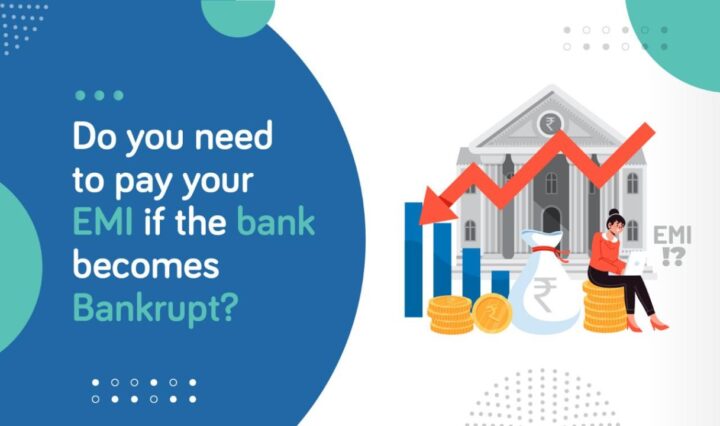
Imagine a scenario where the bank that holds your loan faces financial turmoil or, even worse, declares bankruptcy.
Naturally, questions arise: do you still need to pay your EMI, or can you catch a break?
The answer may surprise you, yes, you still need to pay your EMI. However, there’s a catch, and understanding the process can save you from potential financial hiccups.
In the unfortunate event of a bank’s bankruptcy, the first step is not to panic. Instead, take a breath and assess the situation. You might wonder if the bank’s closure means you’re off the hook for your monthly payments. The truth is, it’s not that simple.
Initially, it might seem like a waiting game. You need to stay vigilant to see if another bank or the Reserve Bank of India (RBI) steps in to manage the aftermath. During this period, hold off on your EMI payments temporarily. But here’s the critical part, this grace period won’t last forever.
Once the dust settles and a new entity takes charge or the RBI appoints someone, it’s time to resume your EMI payments promptly. Failing to do so can result in your loan defaulting, which, in turn, can have severe consequences on your credit score, specifically impacting your CIBIL score.
Why does this matter?
A healthy credit score is your ticket to smooth financial transactions, especially when applying for future loans. A default on your loan due to missed EMIs can create roadblocks and hurdles, making it challenging to secure loans in the future.
So, while facing a bank’s bankruptcy might feel overwhelming, understanding the process and the need to resume your EMI payments in a timely manner is crucial. It’s your key to maintaining a robust credit profile and ensuring a smoother financial journey ahead. Stay informed, stay proactive, and navigate the twists and turns of the financial landscape with confidence.